Postdoctoral Scholar, University of Chicago
Computational spatial biology focused on multiplex imaging, tissue architecture, cell neighborhoods, and immune microenvironment modeling.
I am a postdoctoral scholar at the University of Chicago specializing in spatial omics and high-dimensional multiplex imaging data. My work focuses on quantitative modeling of tissue architecture, cell neighborhoods, and immune microenvironment organization.
I build scalable analysis pipelines for cell segmentation, phenotyping, spatial network modeling, and inflammation trajectory analysis to uncover spatial biomarkers and disease-associated tissue states.
I am particularly interested in translating spatial data into mechanistic insights and therapeutic hypotheses in immunology and inflammatory disease. My Ph.D. research leveraged large noisy real-world datasets to develop predictive models using statistical analysis, machine learning, and deep learning methods.
A short path through the research and engineering work that shaped this site.
Computational spatial biology focused on multiplex imaging, tissue architecture, cell neighborhoods, and immune microenvironment modeling.
Developed predictive models from large noisy real-world datasets using statistical analysis, machine learning, deep learning, and physically grounded simulation.
Built industrial robotics applications spanning computer vision, autonomous navigation, machine learning, and virtual reality-enabled training systems.
Worked on vision-guided collaborative robotics and motion planning for manufacturing systems using point cloud processing and computer vision.
Current spatial-biology research, earlier modeling work, and open-source tooling.
A data-driven probabilistic simulator for chemical plumes across spatial scales, designed as a test bed for plume tracing algorithms and embodied sensing research.
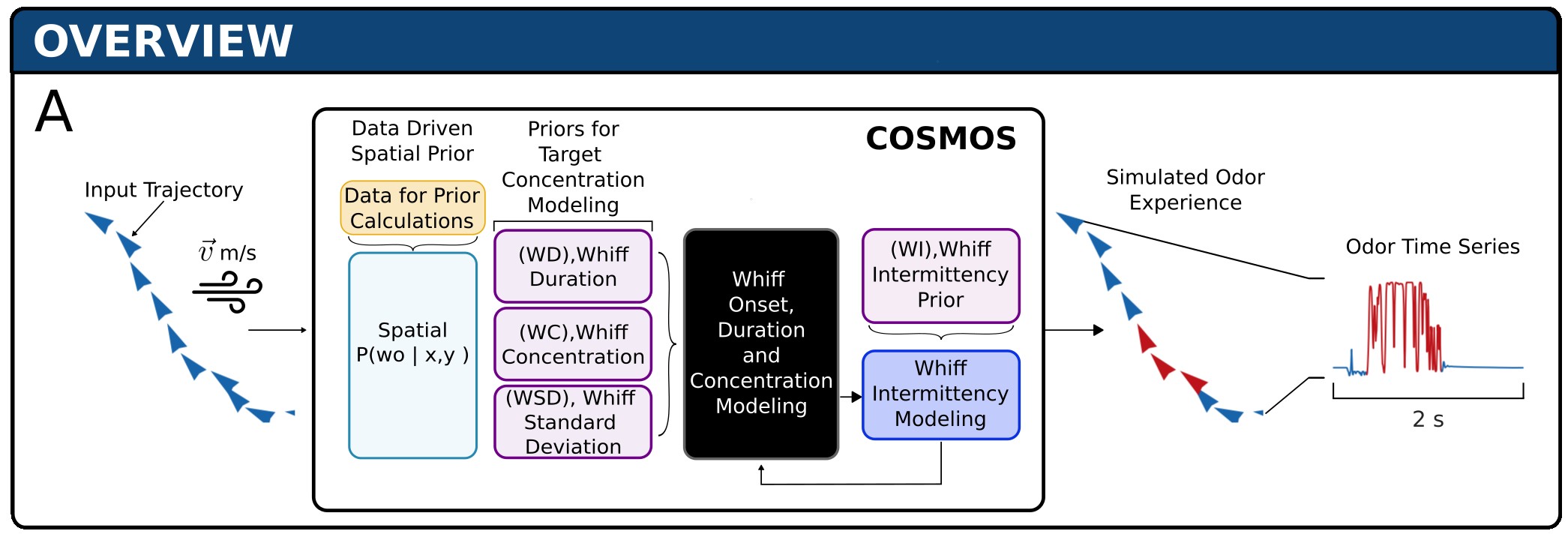
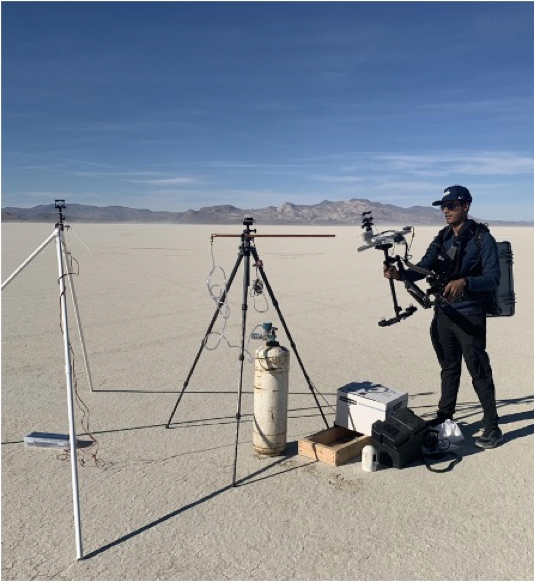
Statistical models and Kalman filtering on 15 million rows of sensor data, reaching 82% prediction accuracy from noisy real-world plume measurements.
Journal of the Royal Society InterfaceCOSMOS was integrated with a physics-enabled robotics simulator to test odor tracking behavior under wind, gravity, and motion-control constraints.
Patient response modeling with Scanpy workflows, random forests, and convolutional neural networks.
Open repositoryA command-line assistant interface built around the ChatGPT API.
Open repositoryA YouTube summarization tool powered by Google Gemini models.
Open repository